
[Sponsored by CTF Consoles]
In today’s mission-critical environments, from utilities and security centres to air traffic control and energy networks, operators work at the intersection of human cognition and advanced technology.
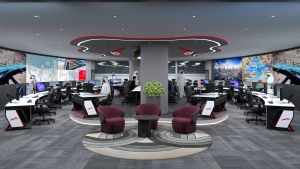
As automation and data complexity grow, control rooms are no longer just technical spaces; they are human-performance hubs, where design directly influences safety, efficiency, and well-being.
From Ergonomics to Human-Centred Design
Traditional control rooms were engineered around equipment, not people. But forward-thinking organisations are shifting toward human-centred design (HCD), an approach that aligns workspace design with cognitive and physical capabilities. Following ISO 11064 ergonomic standards, modern consoles now include height-adjustable desks, zoned layouts, and circadian lighting that supports focus across 24-hour operations.
Operators increasingly expect their environment to work with them, not against them. Personalized lighting mimics natural daylight, adaptive acoustics reduce mental fatigue, and smart furniture allows postural variation to prevent musculoskeletal strain. The result is a workspace that sustains alertness, reduces cognitive friction, and enhances decision-making accuracy over long shifts.
The Rise of Health Technology and Wearables
Health technology is redefining how organisations think about performance and well-being. Wearable sensors such as posture trackers, smartwatches, and biometric patches, are now capable of continuously monitoring heart rate, stress levels, temperature, and even oxygen saturation.
When connected to central dashboards, these devices provide real-time data on fatigue, focus, and physical strain, allowing supervisors to proactively rebalance workloads or schedule rest breaks before performance dips.
At the same time, posture-corrective wearables gently vibrate when an operator slouches, helping reduce long-term spinal issues and repetitive-strain injuries. Integrated with environmental sensors, these systems can automatically adjust lighting, airflow, and temperature to maintain comfort and alertness throughout a shift.
Beyond physical wellness, cognitive monitoring tools are emerging that detect mental overload or under-stimulation using subtle biometric signals. When stress levels rise, adaptive human-machine interfaces (HMIs) simplify information displays; as calm returns, the full data set reappears. This dynamic feedback loop known as adaptive automation, allows humans and machines to cooperate intelligently, preserving focus and performance even under pressure.

The Business Case for Well-Being
The connection between design, health, and performance is now measurable. Ergonomic and environmental improvements can reduce procedural errors by up to 25%, lower absenteeism, and increase retention. A control room designed around human performance is not an expense; it’s a strategic investment in operational resilience.
By embedding wellness into infrastructure, through posture-friendly consoles, controlled lighting, and wearable data feedback — organisations build safer, more efficient operations. Beyond productivity, this shift reflects a leadership mindset that values people as critical assets, not just system operators.
Where Technology Meets Human Needs
As control rooms move toward higher levels of autonomy, the operator’s role will evolve from manual control to strategic oversight. The next-generation workspace will recognize who is seated, automatically adjust console height, tune lighting to personal preferences, and even forecast fatigue risk using predictive analytics.
At CTF, this philosophy drives every design decision. Each console merges ergonomic precision with digital intelligence, supporting both physical comfort and cognitive performance. The goal is simple yet transformative: to create environments that elevate people as much as they empower technology.
Control rooms are no longer defined by the equipment they hold but by how effectively they support the people who operate them. Control rooms of the future will be environments where ergonomics, health, and technology converge, not just to enhance comfort, but to elevate human performance itself.

CTF Consoles are global leaders in ergonomic console design and control-room furniture solutions, creating workspaces that blend technical precision with human-centred design, ensuring that operators can perform at their best.
We are proud to have CTF sponsor the inaugural Command Centre Management Summit in Dubai.
You can also meet CTF at the Critical Control Rooms World Congress in Madrid.
No responses yet